
A Truck's Own Electronic Records Can Show What Really Happened Before a Crash
Truck accidents in Maryland often turn into a fight over what actually happened. The trucker may claim the other driver cut in or stopped short. The other driver may remember those final seconds very differently. Most big rigs carry electronic systems that track what the truck was actually doing. That's a good thing for injury victims who simply want to set the record straight, especially when the truck driver was clearly at fault.
These crashes take a heavy toll. Crashes involving large trucks killed 64 people in Maryland in 2024, according to the National Highway Traffic Safety Administration (NHTSA). Of those 64 deaths, 52 were people outside the truck. Nationwide, these crashes claimed 5,340 lives that year.
Our Maryland truck accident lawyers at Finnegan Cannon know a truck's own data can confirm what you probably already know: you didn't do anything wrong. That data can also disappear quickly, so it pays to understand what it shows, which rules protect it, and how long it lasts.
|
Quick Facts
|
What Is a Truck Black Box and What Does It Record?
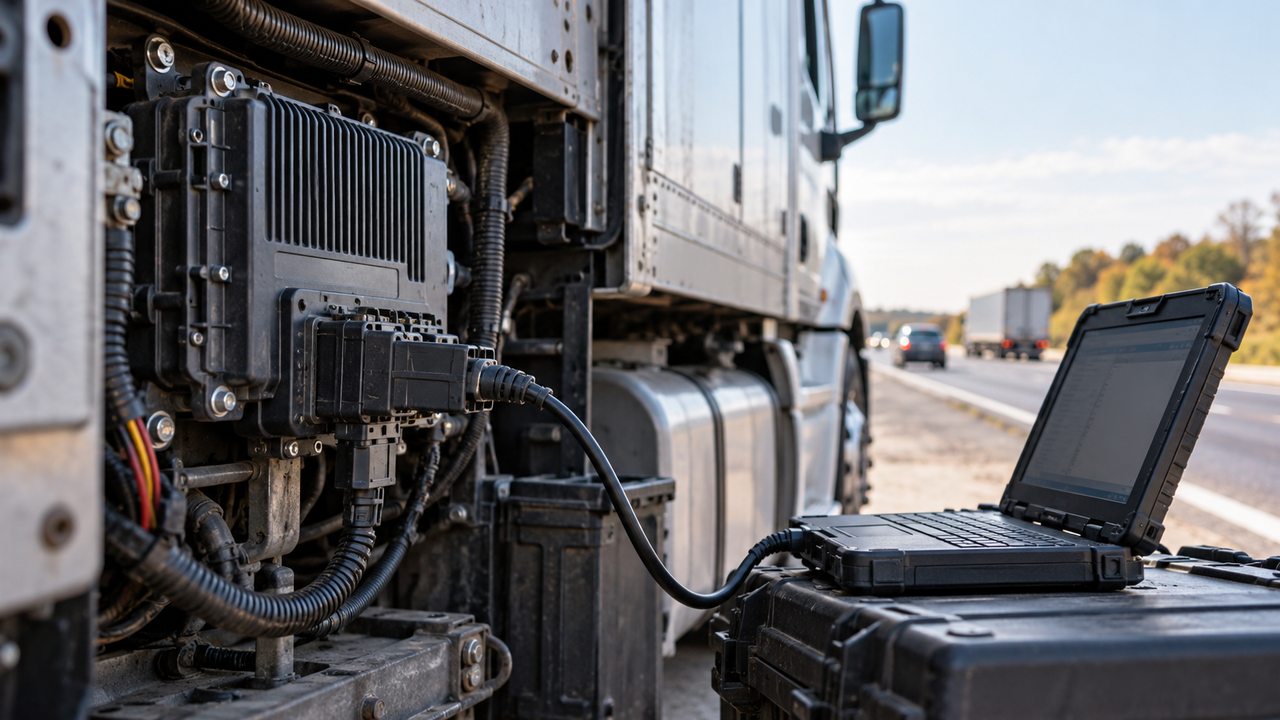
A truck black box is a nickname for several electronic systems rather than one device. Each one keeps its own record of how the truck moved and how it was driven.
- Engine Control Module (ECM) – The main engine computer tracks speed, throttle, and brake use. Many models save a data snapshot when the truck slows suddenly.
- Electronic Logging Device (ELD) – This device connects to the engine and records when the driver is on duty or behind the wheel.
- Fleet Tracking Systems – Satellite tracking software can log a truck's location, speed, and hard-braking alerts on a company server.
- Onboard Cameras – Forward-facing and driver-facing cameras may capture the road ahead and what the driver was doing.
Not every truck carries all four systems. An early task after a crash is figuring out which devices the truck had and who holds the data. Some records live only on a chip inside the truck. Others upload to a vendor's server far from the Maryland crash scene.
Which Federal Laws Govern Truck Black Box Data?
Federal safety rules for big rigs come from the Federal Motor Carrier Safety Administration (FMCSA). Under Title 49 of the Code of Federal Regulations (CFR) Section 395.8, most trucking companies have needed ELDs since Dec. 18, 2017. Drivers use them to record when they're driving, working, or resting. That gives investigators a detailed look at the driver's day before a crash.
The rule includes a few exceptions. Trucks with engines built before model year 2000 can still use paper logs. So can drivers who need logs on no more than eight days in any 30-day period. Those exceptions matter after a crash. A handwritten logbook may hide gaps that an electronic device would have caught.
Federal law also cracks down on cheating. Under 49 CFR 395.8(e), drivers and trucking companies can't make false duty reports. They also can't disable, jam, or reprogram an ELD so it records inaccurately. Missing hours or suspicious edits can become evidence on their own. They may point to a driver hiding extra time behind the wheel.
Do Maryland Laws Apply to Truck Black Box Evidence?
Yes. Maryland applies most federal trucking safety rules to carriers operating here. The Code of Maryland Regulations (COMAR) 11.21.01.02 adopts the federal rules on hours of service, vehicle maintenance, and more. Some exceptions apply. As a result, trucks that never leave Maryland can still create many of the same records.
Maryland courts also punish anyone who destroys, hides, or alters key evidence once a lawsuit looks likely. This misconduct is called spoliation. In Cumberland Insurance Group v. Delmarva Power, a Maryland appeals court upheld a ruling that ended an insurer's claim after it destroyed key evidence. The rule cuts both ways, so injured people should preserve their own vehicles too.
Maryland also follows one of the harshest fault rules in the country. An injured person found even slightly at fault for a crash can lose the right to any compensation. This rule is called contributory negligence. Insurers may try to pin some blame on the victim. Objective truck data can undercut that argument.
How Long Do Trucking Companies Have to Keep Black Box Data?
Each type of truck record runs on its own clock. Some of those clocks run out far sooner than injured people tend to expect.
- Engine Computer Data – No federal rule sets a minimum time to keep it. New driving events can overwrite crash data once the truck returns to service.
- ELD and Logbook Records – Under 49 CFR 395.8(k), trucking companies must keep duty records and supporting documents for at least six months.
- Accident Register – Under 49 CFR 390.15, carriers must log each crash in an accident register and keep it for three years.
- Maryland Filing Deadlines – Courts and Judicial Proceedings Section 5-101 gives most injured people three years to sue. Courts and Judicial Proceedings Section 3-904 generally gives families three years after a death.
Notice the gap between those timelines. A family may have years to file a claim, yet key crash data can vanish within weeks. A written notice telling the trucking company to save specific evidence can close that gap. Lawyers call this a preservation letter. Destroying data after receiving one can bring court penalties.
Turning Raw Truck Data Into Proof of Fault
Data from a truck's computer can build a second-by-second timeline of a wreck. Speed records can show that the truck driver was going too fast for traffic or weather. Brake data can reveal whether the trucker reacted at all. Throttle readings can even show a driver who sped up instead of slowing down before impact.
Each type of data answers a different question about the final moments before a crash.
| Type of Data | What It Can Show |
|---|---|
| Speed readings | Whether the truck was going too fast for traffic, weather, or the posted limit |
| Brake application | Whether and when the driver tried to stop |
| Throttle position | Whether the driver sped up instead of slowing down |
| Electronic logging records | Whether a tired driver pushed past federal driving limits |
| Fleet tracking alerts | Earlier hard-braking or speeding events that point to a pattern |
| Onboard camera video | What the road looked like and what the driver was doing |
Logging data tells a different part of the story. The hours-of-service rules in 49 CFR Part 395 limit how long truckers can drive before resting. ELD records can show a tired driver who pushed past those limits. They may also reveal a company that set impossible schedules. That can make the company itself legally responsible, or liable.
Raw files rarely speak for themselves in court. Accident reconstruction experts use special software to download the data without changing it. They then compare the numbers with skid marks, vehicle damage, and scene photos. When everything lines up, a trucking company may struggle to defend its driver's version of events.
Securing the Evidence Before the Trucking Company Controls the Story
A truck crash in Maryland can leave you facing a trucking company, its insurer, and aggressive lawyers all at once. Those businesses may also control the evidence that proves what happened. That's why they're often reluctant to share such information, especially when it shows that the truck driver was clearly at fault.
Our team works quickly to secure black box data before it disappears. Our ability to obtain solid evidence often translates into strong case results. In one wrongful death case, our firm obtained a $1.5 million settlement after a head-on crash in Virginia. The at-fault car's crash data showed it crossed the center line at 58 mph without braking.
If you were hurt in a truck crash in Maryland, the evidence you need may already be in jeopardy. Make your case count. Contact us for a free consultation so we can review your crash, answer your questions, and explain your legal options. We can send preservation letters and bring in experts right away. Whatever it takes, we will work hard to win your case, on your terms.
"The firm takes the time to listen, offers strategic proactive advice and develops creative legal strategies. Importantly, the firm dots each 'i' and crosses every 't' to best serve client needs. A firm that is highly recommended!" - Idriys A., ⭐⭐⭐⭐⭐