
A Fleeing Driver Doesn't Eliminate Every Path to Compensation
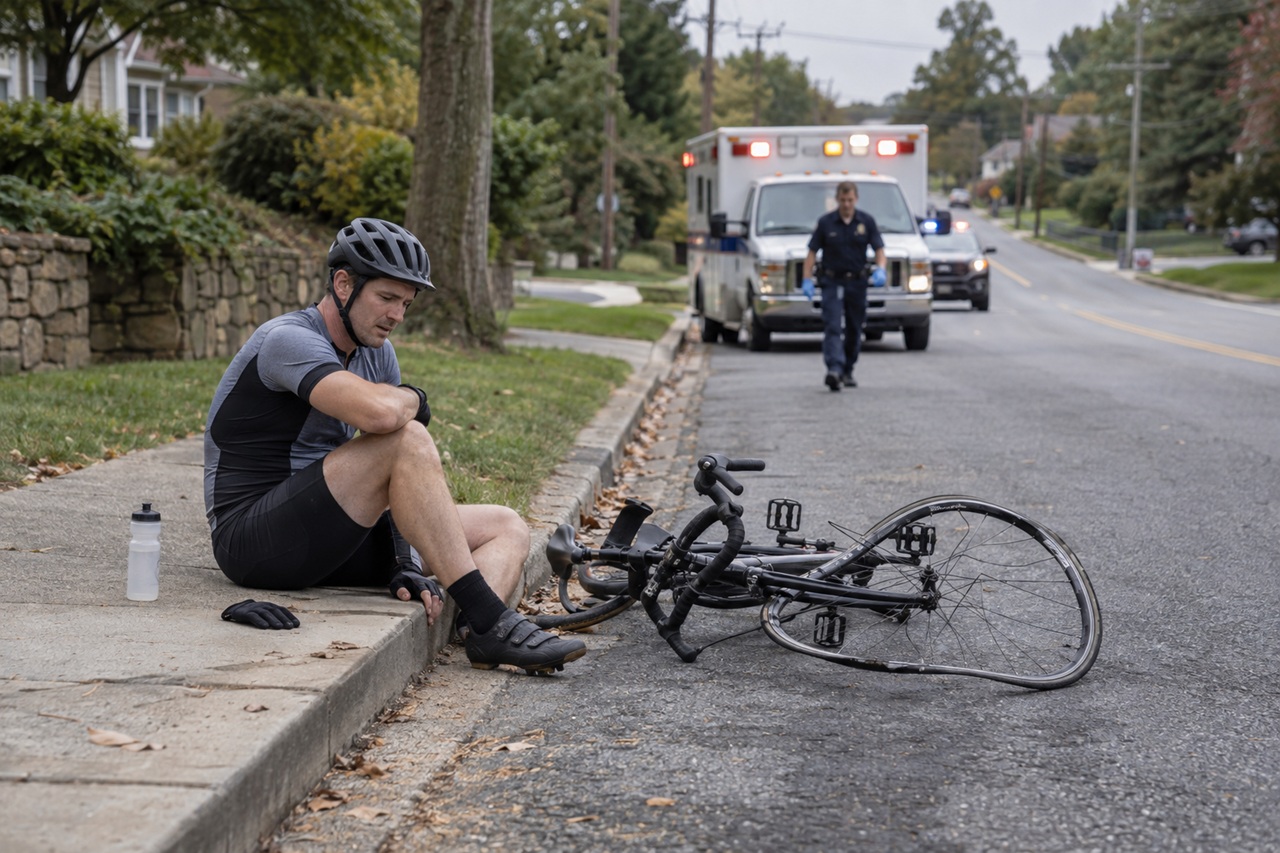
A cyclist riding through a Silver Spring intersection has almost no protection if a driver clips them and speeds off. Bicycle accidents are already dangerous. A hit-and-run makes things worse. The person responsible disappears, leaving an injured rider with medical bills and no obvious answer about who will pay them.
This kind of crash is part of a much larger safety problem. An average of 789 cyclists are injured each year in Maryland in collisions with motor vehicles, according to the Maryland Department of Transportation's Zero Deaths Maryland program.
Our Silver Spring bicycle accident lawyers at Finnegan Cannon help injured cyclists identify every available source of compensation after serious crashes. A hit-and-run doesn't necessarily mean an injured rider has to absorb the financial cost of someone else's negligence. Maryland law and available insurance coverage can create more than one path forward, even when police never identify the driver.
Maryland Drivers Must Stop and Render Aid After an Injury Crash
Maryland law doesn't leave a driver's responsibilities after a crash up to guesswork. Under Maryland Transportation Article § 20-102, a driver involved in a crash that injures another person must stop, return to the scene if necessary, and remain there until the driver has fulfilled the duties required by law.
Those duties include providing identifying information and reasonable assistance to an injured person under § 20-104. Drivers must also provide required insurance information.
Leaving the scene can carry serious criminal consequences. A standard violation involving bodily injury can result in jail time and fines. If the crash causes serious bodily injury and the driver knew or reasonably should have known that serious injury might result, the offense can become a felony carrying up to five years in prison and a fine of up to $5,000.
The criminal case and the cyclist's civil injury claim are separate, though. An injured rider doesn't need to wait for a criminal conviction before investigating insurance coverage, preserving evidence, or pursuing a claim for compensation.
If Police Identify the Driver, Liability Insurance May Cover the Losses
Sometimes a witness gets part of a license plate number. A business camera records the vehicle leaving the scene. A doorbell camera catches it a few blocks away. Police may eventually identify the driver even when nobody knew who was responsible immediately after the crash.
When that happens, the injured cyclist may be able to pursue a claim against the driver's liability insurance just as they would after another negligence-based crash.
Available compensation may include medical expenses, lost income, pain and suffering, and damage to the bicycle or other property. The fact that the driver fled doesn't automatically establish every element of the civil claim, however. The evidence still needs to show how the crash happened and that the driver's negligence caused the cyclist's injuries.
That's one reason early investigation matters. The driver's identity may solve one part of the case, but disputes over fault, injuries, and damages can still remain.
An Unidentified Hit-and-Run Driver Can Trigger Uninsured Motorist Coverage
When police never find the driver, uninsured motorist coverage can become one of the most important parts of the case.
Under Maryland Insurance Article § 19-509, Maryland automobile policies generally include uninsured motorist protection. The Maryland Insurance Administration specifically explains that a driver can be treated as uninsured when the driver and vehicle are unknown, such as after a hit-and-run.
That means an injured cyclist who qualifies as an insured under an applicable policy may be able to make a UM claim even though nobody knows the fleeing driver's name.
The cyclist still has to prove that the unidentified driver caused the crash. Maryland's contributory negligence rule also applies to uninsured motorist claims, so evidence showing exactly what happened can become especially important.
Household Auto Policies and PIP May Provide Additional Coverage
A cyclist shouldn't assume there is no available coverage simply because they weren't driving a car at the time of the collision.
Someone who doesn't personally own a vehicle may still qualify as an insured under an automobile policy issued to a spouse, parent, or another member of the household, depending on the policy and the person's relationship to the named insured. That's why reviewing every potentially applicable household policy can matter after a serious hit-and-run.
Personal injury protection, commonly called PIP, may provide another source of benefits. Under Maryland Insurance Article § 19-505, PIP can cover certain medical, hospital, and disability losses for qualifying insureds injured in motor vehicle accidents. The statute specifically addresses people injured while on vehicles operated by muscular power, which can include bicycles, when the accident involves an insured motor vehicle.
Coverage depends on the policy, household relationships, applicable waivers or rejections, and the circumstances of the crash. A careful insurance review can uncover benefits an injured cyclist might never have known existed.
Evidence Becomes Even More Important When the Driver Disappears
A hit-and-run claim often depends on evidence because the driver isn't standing at the scene to provide information or explain what happened. The strongest cases usually bring together several different sources of proof.
- Surveillance And Doorbell Footage – Businesses, homes, traffic cameras, and parked vehicles may capture the collision or the fleeing vehicle before or after impact.
- Witness Statements – Bystanders may remember the vehicle's color, make, direction of travel, or part of a license plate number.
- The Police Crash Report – Officers may document debris, skid marks, road conditions, witness information, and descriptions of the vehicle.
- Photos Of The Bicycle And Crash Scene – Damage patterns can help explain the angle and force of impact before the bicycle is repaired or discarded.
- Medical Records – Prompt treatment helps document the injuries and connect them to the collision.
- Accident Reconstruction Evidence – In a disputed case, physical evidence can sometimes establish how the collision occurred even when the other driver isn't available to give an account.
Even incomplete evidence can matter. A partial plate combined with the vehicle's color, model, direction of travel, and nearby camera footage may give investigators far more to work with than any one detail standing alone.
Finnegan Cannon has seen how important that reconstruction work can be. In one Montgomery County bicycle case, our attorneys secured an $887,500 settlement for an 85-year-old cyclist who lost his leg after being struck by a tractor-trailer. The truck driver claimed the cyclist moved into the truck's path. Accident reconstruction helped demonstrate that the collision couldn't have happened the way the driver described.
That case wasn't a hit-and-run, but the lesson carries directly into these claims: when fault is disputed, physical evidence can matter more than either side's version of events.
Maryland's Contributory Negligence Rule Raises the Stakes
Insurance companies often look for ways to shift part of the blame onto an injured cyclist. In Maryland, that strategy carries unusually high stakes.
Maryland follows a strict contributory negligence rule. If an injured person contributed to causing the crash, even slightly, they may be barred from recovering compensation.
An insurer might claim the cyclist entered the intersection improperly, failed to use required lighting, rode against traffic, or otherwise contributed to the collision. Those arguments can arise even when the driver fled the scene.
That makes evidence preservation especially important. Camera footage, witness accounts, bicycle damage, traffic signals, road markings, and reconstruction evidence can help establish what the cyclist actually did before impact instead of allowing an insurer to fill in the missing details in its own favor.
A Hit-and-Run Claim Can Include More Than Medical Bills
A serious bicycle crash can affect almost every part of someone's life. Depending on the injuries and available coverage, a claim may seek compensation for several different losses.
- Medical Expenses – Emergency treatment, surgery, hospitalization, rehabilitation, physical therapy, medication, and reasonably anticipated future care.
- Lost Income – Wages lost during recovery and, in serious cases, diminished future earning capacity.
- Pain And Suffering – The physical pain, emotional distress, disability, and disruption the injuries cause.
- Property Damage – Repair or replacement of the bicycle, helmet, cycling equipment, and other damaged property when recoverable.
The value of a claim depends on far more than the type of collision. A broken wrist that heals within weeks presents a very different financial picture from a traumatic brain injury, spinal injury, permanent mobility limitation, or amputation. Understanding the full effect of the injury is essential before resolving an insurance claim.
Finnegan Cannon Can Identify Every Potential Source of Recovery
Hit-and-run bicycle cases can involve several layers of investigation at once. The driver may need to be identified. Surveillance footage may need to be preserved. Multiple household insurance policies may need to be reviewed. An insurer may dispute fault under Maryland's contributory negligence rule.
Our Silver Spring bicycle accident lawyers at Finnegan Cannon investigate each of those issues instead of assuming the fleeing driver was the only possible source of compensation. We can examine the crash evidence, review available UM and PIP coverage, determine whether another household policy applies, and pursue the insurance benefits the facts support.
We've recovered more than $150 million for injured clients, including the $887,500 recovery for a Montgomery County cyclist whose fault was disputed after a devastating crash.
It's not just an accident, it's your life. If a driver struck you while you were riding a bicycle and left the scene, contact Finnegan Cannon for a free consultation. We'll review what happened, identify the insurance coverage that may apply, and explain the next steps for protecting your claim.
"They were exceptional in the knowledge area with knowing what is best for my case." - Denise S., ⭐⭐⭐⭐⭐